Blue Monday is notoriously known as “the most depressing day of the year”. It started in the 2000’s as a PR idea from a travel company, calculated with a formula that mixed weather, debt and failed resolutions. Catchy and all, but not real science.
Yet, the conversation is still useful. January can be tough, cold weather, right after the festive season, goals looming over your head. But there are gentle, practical tips that can help.
We’ll keep this short and sweet, here are five quick phone tweaks that can lift mood, reduce stress and protect sleep.
(And yes, Blue Monday is also a classic New Order track from 1983, different vibe though.)
- Overview show
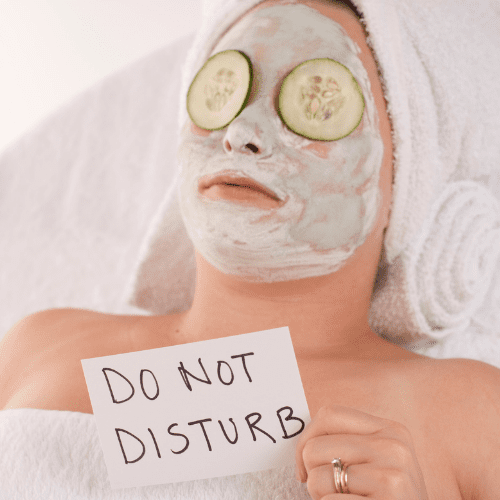
- Turn on Do Not Disturb for one hour of ‘me time’.
- 2. Create a feel good carousel widget (of family, friends, pets).
- 3. Use True Tone/Night Shift and equivalents to protect evening wind-down
- 4. Reduce non-essential notifications; be selective on who gets through.
- 5. Declutter your phone: fewer icons, fewer distractions.
- Frequently Asked Questions (FAQ's):
- Conclusion
Turn on Do Not Disturb for one hour of ‘me time’.
Pick a daily hour (say like 7-8pm) and switch on Do Not Disturb or Focus mode. Feel free to allow calls through from favourites though if you need to stay connected.
How to:
- iPhone: Settings –> Focus –> Do Not Disturb –> Add Schedule.
- Android: Settings –> Notifications –> Do Not Disturb –> Schedule.
Why does this help? Constant pings from your phone are filling your attention and raising mental load. Studies show even hearing or seeing a notification can disrupt your focus and spike distraction, all without touching your phone (Stothart et al., 2015). A protected, quite hour to yourself lets your brain settle.
2. Create a feel good carousel widget (of family, friends, pets).
Set a rotaing photo widget on your home screen featuring the people and moments that matter.
How to:
- iPhone: Photos –> Albums/Favourites –> Long press home screen –> ‘+’ button –> Photos or Smart Stack –> Choose album
- Android: Long Press Home Screen –> Widgets –> Photos/Google Photos –> Select album.

Why does this help? Seeing loved ones can act like a built in safety-cue, easing threat responses (Bublatzky et al., 2022) and nudging mood upwards. It’s a tiny little jolt of positivity you’ll catch a dozen times a day.
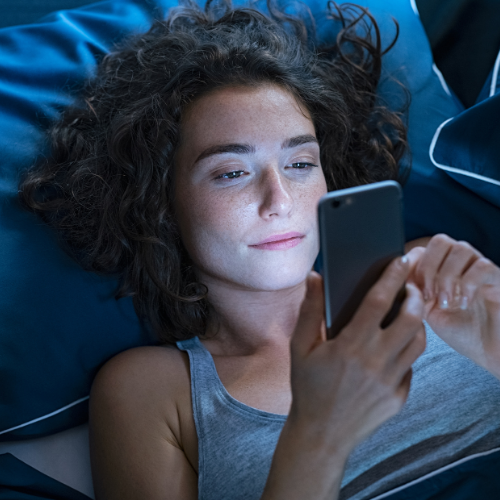
3. Use True Tone/Night Shift and equivalents to protect evening wind-down
Keep True Tone (which adapts your display to ambient light) on. And from sunset, enable Night Shift (iPhone) or Night Light (Android) to reduce blue-rich light.
How to:
- iPhone: Settings –> Display & Brightness –> True Tone (on.). Night Shift –> Scheduled “Sunset to Sunrise”.
- Android: Settings –> Display –> Night Light –> Schedule “Sunset to Sunrise”.
Why does it help? Blue-weighted light in the evening suppresses melatonin more than other wavelengths. This shifts circadian rhythm, which means sleeping is harder (Harvard, 2024). Bad sleep = bad mood the next day. Reduce blue light before bed to support better sleep.
4. Reduce non-essential notifications; be selective on who gets through.
Audit your alerts. Keep messages and calls from your inner circle and critical apps. Silence the rest (social media, shopping, random news).
How to:
iPhone: Settings –> Notifications –> per app: set to ‘Deliver Quietly’ or off. Add VIP contacts to Favourites in Phone and allow in Focus.
Android: Settings –> Notifications –> App notifications –> turn off or set “silent”. Mark priority contacts and allow during DND.

Why does it help? Fewer alerts – fewer attention grabs. Studies link notifications to immediate performance drops and ‘alert fatigue’ (Stothart et al., 2019), so by curating your alerts, you can lower stress and keep attention where you want it.

5. Declutter your phone: fewer icons, fewer distractions.
Remove unsued apps, group essentials into labelled folders and keep one main clean home screen. Hide or delete what ever is draining you, or doesn’t need immediate access.
How to:
iPhone: Long-press –> Remove apps you don’t use –> App library for the rest. Keep a couple folders on page one.
Android: Long-press –? Uninstall or delete –> Keep one home screen –> Folders for ‘Daily’, ‘Work’, ‘Wellbeing’.
Why it helps? Visual clutter competes for your brains attention, increasing your cognitive load. Clearer space support focus and reduce background stress. Studied linked cluttered environments with impaired attention and higher cortisol, especially in the evenings (Saxbe and Repetti, 2010). Your phone is a little pocket-environment, keeping it tidy helps.
Frequently Asked Questions (FAQ's):
Not as a scientific date. It began as a PR idea using a tongue-in-cheek “formula.” Low mood can happen any day, but support is available year-round
It helps, but habits matter too: dim lights, regular bedtimes, and putting the phone away 60–90 minutes before sleep work together.
Conclusion
Blue Monday or not, small phone habits can support mental health: protect quiet time, surface positive memories, dim evening blue light, trim notifications, and declutter your screen. None of this replaces professional care, but they’re easy, low-effort tweaks you can start today.
We know mental health looks different for everyone; this isn’t a one-size-fits-all guide—just ideas that might help some people feel a little lighter. If you’d like a calmer phone without the cost or waste, The Big Phone Store is here to help.
Bibliography:
- Bublatzky, F., Guerra, P., Pastor, M.C., Schupp, H.T. and Vila, J. (2022) ‘The mere sight of loved ones does not inhibit fear acquisition or speed up extinction learning’, Scientific Reports, 12, 1377. doi:10.1038/s41598-022-06514-y. Available at: The mere sight of loved ones does not inhibit psychophysiological defense mechanisms when threatened – PMC
- Harvard Health Publishing (2024) ‘Blue light has a dark side’, Harvard Medical School. Available at: Blue light has a dark side – Harvard Health
- Saxbe, D.E. and Repetti, R.L. (2010) ‘No place like home: Home tours correlate with daily patterns of mood and cortisol’, Personality and Social Psychology Bulletin, 36(1), pp. 71–81. doi:10.1177/0146167209352864. Available at: Saxbe_Repetti_2010b.pdf
- Stothart, C., Mitchum, A. and Yehnert, C. (2015) ‘The attentional cost of receiving a cell phone notification’, Journal of Experimental Psychology: Human Perception and Performance, 41(4), pp. 893–897. doi:10.1037/xhp0000100. Available at: The attentional cost of receiving a cell phone notification – PubMed.